Horry County Court is the central judicial system serving Horry County, South Carolina, providing access to legal filings, hearings, and public records information. Residents can use this page to quickly find details about the Horry County Courthouse, bond court, the judicial center, and services across the 15th Judicial Circuit. The court system handles a wide range of cases, from civil disputes and traffic matters to criminal proceedings and family law issues. By offering clear information on schedules, procedures, and required forms, it ensures that citizens can manage their court-related needs efficiently.
The Horry County Court system covers criminal, civil, traffic, family, and probate cases, offering essential judicial services and public records info for residents. Key locations include the Horry County Courthouse in Conway, the Horry County Judicial Center, and bond court at the J. Reuben Long Detention Center, making it easier for citizens to access courts, schedules, and records efficiently. This resource also highlights practical guidance on filing documents, attending hearings, and contacting court officials, providing a comprehensive view of the Horry County court system. By centralizing all relevant information it saves time and helps residents stay informed about their legal responsibilities and rights.
What is Horry County’s Court System
Horry County Court is the local judicial system serving residents of Horry County, South Carolina, and is part of the 15th Judicial Circuit. It includes several courts that handle criminal, civil, family, and specialized legal matters, ensuring the public has access to essential judicial services. Horry County operates multiple courts under one system to address different types of legal matters efficiently.
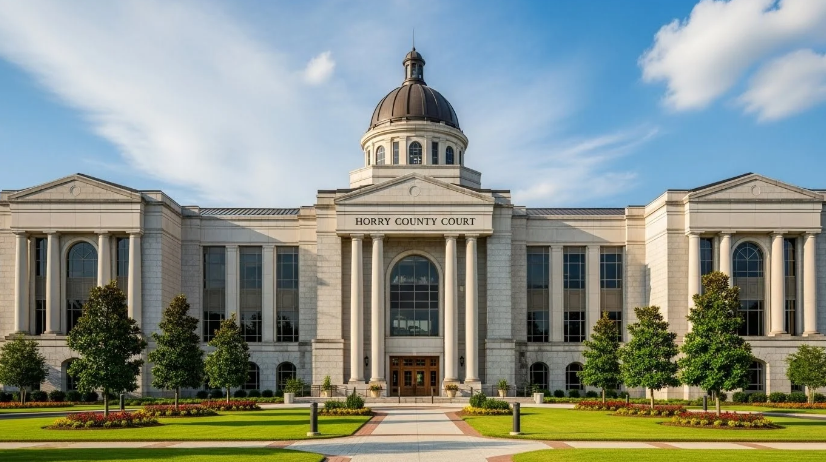
The main courts include:
- Circuit Court (General Sessions / Common Pleas): Handles serious criminal cases, civil disputes over larger amounts, and appeals from lower courts.
- Family Court: Focuses on matters like divorce, child custody, child support, and domestic issues.
- Magistrate Court: Deals with small claims, minor criminal offenses, bond hearings, and initial appearances.
- Probate Court: Oversees wills, estates, guardianships, and related legal processes.
- Masters-in-Equity: Manages foreclosure, property disputes, and equity cases.
- Juvenile Court: Addresses cases involving minors, including delinquency, dependency, and neglect matters.
Each court has a specific jurisdiction to ensure legal matters are handled by the appropriate judicial authority. For example, criminal cases range from misdemeanors in Magistrate Court to felony trials in Circuit Court, while civil cases can include personal injury, contract disputes, or property claims. Family Court focuses on domestic legal services such as custody agreements and support enforcement. These distinctions allow residents to find legal solutions efficiently and receive fair adjudication.
Horry County’s court system serves the public in multiple ways:
- Adjudication of cases: Resolving criminal, civil, family, and juvenile matters.
- Access to public records: Providing official documentation for legal, personal, or business purposes.
- Legal services support: Offering information and assistance for filings, bonds, and hearings.
- Jury management: Organizing jury selection and service for trials.
- Filing and documentation: Accepting petitions, motions, and other legal paperwork.
By offering these services, Horry County courts ensure that residents have reliable access to judicial services, public records, and legal assistance. This structure promotes transparency and efficiency across all levels of the county’s legal system.
Key Takeaways:
| Court Type | Jurisdiction / Role | Typical Cases Handled |
|---|---|---|
| Circuit Court | Criminal and civil trials, appeals | Felonies, large civil claims |
| Family Court | Domestic and family law | Divorce, custody, support |
| Magistrate Court | Minor criminal offenses, small claims | Misdemeanors, traffic violations, bonds |
| Probate Court | Estates and guardianships | Wills, probate, guardianship |
| Masters-in-Equity | Property and equity disputes | Foreclosures, land disputes |
| Juvenile Court | Cases involving minors | Misdemeanors, traffic violations, and bonds |
Search Court Records & Dockets
Horry County residents can access public court records and track court dockets online or in person. Users can search by case number, party name, or date of filing, and obtain detailed case information from official sources.
How to Search Court Records
Searching Horry County court records begins with understanding the correct method to locate accurate information:
- Use the official Horry County court portal: Visit https://www.horrycountysc.gov/departments/court/
- Enter search criteria: Input a case number, party name, or filing date.
- Filter by court type: Options include Circuit, Magistrate, Family, or Probate Court.
- Review results: Click on individual cases for summaries, hearing dates, assigned judges, and case status.
Where to View Records & Costs
Users have multiple options for accessing court records. Each method varies by accessibility, speed, and cost.
| Access Method | What You Can View | Cost | Notes |
|---|---|---|---|
| Online Portal | Can be requested by mail or in person | Free | Case summaries, docket info, and hearing dates |
| Download Records (PDF) | Complete case documents | $0.50–$1 per page | Fees vary by document type |
| Certified Copies (Clerk of Court) | Official certified record for legal use | $5–$15 per document | Some records may require an appointment or ID verification |
| In-Person Search | Full access to physical case files | $0–$5 fee | Some records may require appointment or ID verification |
Court Types & What They Handle
Horry County offers a variety of courts to handle different types of cases. Each court serves a specific purpose, from criminal prosecutions to civil disputes, family matters, and specialized treatment programs. Understanding which court manages which cases helps residents access judicial services efficiently.
Circuit Court
The Circuit Court in Horry County is the highest trial-level court in the county and handles a wide range of cases. It is divided into General Sessions and Common Pleas divisions, each with distinct responsibilities. The General Sessions Court focuses on criminal cases, including felonies and serious misdemeanors. This court also oversees preliminary hearings and may issue warrants. It is the first stop for major criminal matters that require formal prosecution.
Common Pleas Court primarily handles non-criminal civil cases, including contract disputes, property claims, and other civil litigation. Residents seeking legal resolutions for civil issues typically file in this division.
When to use Circuit Court:
- Major criminal charges (e.g., burglary, assault, drug offenses)
- Significant civil cases exceeding magistrate or small-claims limits
- Appeals from lower courts
Circuit Court vs Magistrate / Small Claims: Circuit Court handles higher-stakes matters, while Magistrate Courts handle minor disputes and small claims. Legal terms such as civil court, criminal court, and judicial services often apply here, reflecting the broad range of case types managed at this level.
Magistrate Courts / Bond Court
Magistrate Courts in Horry County focus on minor criminal matters and small civil disputes. They also manage bond hearings, traffic violations, and some domestic-violence cases. These courts provide accessible and quick judicial services for residents with lower-level legal issues.
Key functions include:
- Small claims and civil disputes under a set monetary limit
- Minor criminal offenses, such as petty theft or traffic infractions
- Bond hearings for individuals recently arrested
Limitations: Not all charges can be handled here. Serious crimes like murder or severe sexual offenses must have a bond reviewed by a Circuit Court judge. This ensures appropriate judicial oversight for high-risk cases.
Family Court, Probate, Masters-in-Equity, Juvenile Court
Horry County also has specialized courts to address family, probate, estate, and juvenile matters. Each court focuses on specific legal areas to ensure residents receive targeted judicial services.
Family Court
- Handles divorce, child custody, child support, adoption, and domestic disputes
- Focuses on family law issues and the protection of children and spouses
Probate Court
- Oversees estates, wills, guardianships, and inheritance matters
- Ensures proper legal handling of deceased individuals’ assets
Masters-in-Equity
- Deals with property disputes, foreclosures, and land issues
- Supports civil matters requiring detailed financial and property review
Juvenile Court
- Handles delinquency cases, status offenses, and child welfare matters
- Focuses on rehabilitation and legal protections for minors
These courts provide residents with specialized legal attention and help maintain a clear separation of duties within the Horry County judicial system.
Specialized / Treatment Courts (Drug Court, Mental Health Court)
Horry County also offers treatment courts to support individuals facing substance abuse or mental health challenges. These courts provide alternatives to incarceration and emphasize rehabilitation.
Drug Court
- Serves individuals with substance use disorders involved in the criminal justice system
- Programs typically last 12–18 months and include counseling, monitoring, and community service.
- Focus is on recovery and reducing recidivism
Mental Health Court
- Focuses on defendants with mental health challenges
- Offers structured treatment plans combined with judicial supervision
- Helps reduce repeated incarceration and improves access to psychiatric services
These specialized courts reflect Horry County’s commitment to court system reform and judicial services that meet community needs. Residents seeking information about these programs often search for terms like local courts, court types, treatment programs, and judicial services.
Summary Table of Horry County Courts
| Court Type | Cases Handled | Key Functions | References |
|---|---|---|---|
| Circuit Court | Criminal (felonies, serious misdemeanors), Civil | General Sessions: criminal hearings; Common Pleas: civil litigation | horrycountysc.gov |
| Magistrate Court | Minor criminal, small claims, bond hearings | Quick judicial services, bond for minor offenses | sccourts.org |
| Family Court | Divorce, child support, custody, adoption | Family law issues, child protection | horrycountysc.gov |
| Probate Court | Estates, wills, guardianships | Estate and inheritance matters | horrycountysc.gov |
| Masters-in-Equity | Property disputes, foreclosures | Civil property-related cases | horrycountysc.gov |
| Juvenile Court | Juvenile delinquency, status offenses | Legal protections and rehabilitation for minors | horrycountysc.gov |
| Treatment Courts | Drug Court, Mental Health Court | Rehabilitation and alternative sentencing | horrycountysc.gov |
How to Use Court Services — Public Records, Filings, Records Search & Court Dockets
Horry County Court provides residents with access to a variety of court services, including public records, filings, and court dockets. The Clerk of Court’s office manages these services, helping users request records, track cases, and stay informed about upcoming hearings.
The Role of the Clerk of Court
The Clerk of Court is the official responsible for managing legal filings, maintaining court records, and providing information on court dockets and rosters. This office ensures that legal documents, such as civil, criminal, family, and probate filings, are properly recorded and accessible to the public where allowed.
Key services of the Clerk of Court include:
- Filing legal documents and motions
- Maintaining case records and court rosters
- Managing child support payments and enforcement
- Preparing certified copies of legal records
- Providing access to court calendars and dockets
Public Records
Horry County offers access to a wide range of public records info, including:
- Criminal case records
- Marriage and divorce certificates
- Property and real estate records
- Court filings and legal documents
Many of these records are indexed online and can be searched using:
- Case number
- Party names (plaintiff, defendant)
- Filing dates or hearing dates
Using the online public index or case lookup tools, users can quickly locate court records and legal filings. This system helps attorneys, researchers, and residents track cases or obtain necessary documentation for personal or professional purposes.
How to Request Records
Requesting court records in Horry County is a straightforward process. To make a request, provide the following details:
- Your full name and contact information
- Case number or party names
- Type of record requested (e.g., certified copy, uncertified copy, specific filings)
- Purpose of the request (if needed for certain records)
Requests can often be submitted in person, by mail, or online, depending on the type of record. Some records may be sealed or partially redacted, especially in cases involving minors, sensitive family matters, or confidential proceedings. Always check the Clerk’s guidelines to confirm eligibility and processing times for record requests.
Court Dockets and Court Rosters
Court dockets and rosters provide detailed information about upcoming hearings and case assignments. Residents can use these tools to see:
- Which court is handling a specific case
- Assigned judge’s name
- Scheduled hearing dates and times
- Case type and filing history
Horry County offers online docket search portals where users can perform a court docket search by case number or party name. These portals provide a snapshot of current and future hearings and help the public stay informed about court schedules.
Online Portals and Public Index
Residents seeking court records, filings, or docket information can use the following tools:
- Horry County Public Index – official searchable database for legal documents
- Court filing and record request forms are provided on the county website
- Court calendars and roster lists for specific courts
These portals allow easy access to legal documents, upcoming hearings, and certified records requests. Users are reminded that while many records are online, some documents require formal applications or in-person visits to the Clerk’s office.
Jury Duty & How to Serve in Horry County
Jury duty in Horry County is a civic responsibility where residents help ensure fair trials in local courts. Selected jurors receive a summons about 20 days before their required appearance.
How Jurors Are Selected
Horry County uses random selection from voter registration lists, driver’s license records, and state ID files. The computer-based process ensures a fair cross-section of the community. Once selected, individuals receive a jury summons in the mail, which includes the date, time, and courthouse location.
Key points about selection:
- Summons arrives roughly 20 days before service.
- Selection is random and confidential.
- All qualified residents are eligible, regardless of profession or status.
What to Expect on Arrival
Jurors report to the jury pool room on the first floor of the Horry County Courthouse. Clear signage and staff assistance make check-in straightforward. Parking is available nearby, and jurors may receive $15 per day plus mileage reimbursement.
On arrival:
- Bring your summons and a valid ID.
- Follow directions to the jury pool room.
- Payment and reimbursement details are handled at check-in.
Courthouse Entry Rules & Security
Horry County Courthouse maintains strict security to protect the public and court staff. All visitors pass through a metal detector and an X-ray scanner. Certain items are prohibited, including weapons, large bags, and cell phones. Pacemaker carriers and individuals with medical devices should notify security. Children are generally not allowed in courtrooms during jury duty.
Security and conduct tips:
- Dress in business casual; avoid revealing or casual attire.
- Leave prohibited items in your vehicle or at home.
- Arrive early to complete security checks calmly.
Court-Related Services & Civil Processes
Horry County Court handles more than hearings and trials. The court, along with the Horry County Sheriff’s Office, provides a range of civil and judicial services to support both residents and legal professionals.
Civil Process Services
Civil processes in Horry County include actions that enforce court orders and legal judgments. The Civil Process Division of the Horry County Sheriff’s Office manages services such as:
- Landlord/Tenant Evictions: Ensuring property possession is returned in accordance with court rulings.
- Judgment Execution: Collecting funds or property awarded in a civil judgment.
- Writs, Attachments, and Liens: Enforcing claims against individuals or businesses.
- Subpoenas: Notifying witnesses to appear in court.
- Orders of Seizure: Confiscating property as ordered by the court.
Typical fees for civil processes vary depending on the type of service requested:
| Civil Process Service | Fee Estimate |
|---|---|
| Summons & Complaint Filing | $25–$50 |
| Writ of Execution | $50–$100 |
| Attachments & Liens | $50–$75 |
| Eviction Service | $75–$150 |
Payments can be made via cash, money order, or certified check, and the office filing and procedural steps. Each action requires proper documentation to begin enforcement and ensure compliance with court orders.
Bond Hearings & Inmate Services
The Horry County Detention Center and Bond Court manage bond hearings and services for individuals in custody. Magistrate judges handle bond for most charges, reviewing risk factors and ensuring defendants can meet court obligations. However, magistrates cannot set a bond for serious offenses such as murder or certain sexual crimes.
The detention center also provides inmate services, including processing, record-keeping, and coordination with court schedules. These services support both public safety and the legal process by ensuring that all parties have access to required hearings and notifications.
Public Defender Services
For defendants unable to afford legal representation, public defender services are available. These attorneys work closely with the court system to ensure that indigent defendants receive proper legal support. Public defenders are an integral part of Horry County’s judicial ecosystem, helping maintain fairness and access to justice for all residents.
Special Programs — Treatment Courts & Alternative Courts
Horry County offers specialized courts, such as Horry County Drug Court and Horry County Mental Health Court, which provide alternatives to traditional criminal prosecution. These programs focus on rehabilitation, supervision, and treatment rather than incarceration.
Treatment and Alternative Courts
Special or alternative courts in Horry County are designed to address the underlying causes of criminal behavior, such as substance use or mental health issues. Participants are carefully screened and must meet eligibility requirements, with referral typically coming from the solicitor’s office.
Key features include:
- Structured treatment programs: Participants receive counseling, therapy, or medical support.
- Supervision: Regular court check-ins and monitoring ensure accountability.
- Duration: Programs usually last 9–18 months, depending on individual progress.
- Benefits: Reduces jail time, promotes public safety, and supports long-term rehabilitation.
By integrating legal oversight with treatment services, these courts aim to reduce repeat offenses while supporting participants’ recovery and reintegration into the community.
How These Courts Fit Into the Horry County Judicial System
Alternative courts complement the broader court system and judicial services in Horry County by offering solutions beyond standard criminal procedures. Unlike traditional courts, which primarily focus on determining guilt and imposing punishment, treatment courts emphasize recovery and long-term behavioral change. This approach contributes to community safety, decreases incarceration costs, and offers a pathway to rehabilitation for qualifying defendants.
Participants remain under judicial supervision and must comply with program requirements, such as attending therapy sessions, maintaining employment or education, and submitting to regular drug testing when applicable. Successful completion often results in reduced charges or dismissal of certain offenses.
Practical Information for Participants
Defendants interested in these programs should contact the Horry County Solicitor’s Office, as entry requires a formal referral. Not every defendant qualifies, as eligibility depends on the type of offense, criminal history, and individual needs.
- Contact: Horry County Solicitor’s Office
- Referral requirement: Mandatory
- Eligibility: Determined case-by-case by the solicitor and court
For more details, official information is available on horrycountysc.gov.
Benefits at a glance:
| Feature | Horry County Drug & Mental Health Courts |
|---|---|
| Duration | 9–18 months |
| Focus | Treatment, supervision, rehabilitation |
| Outcome | Reduced incarceration, improved public safety |
| Referral | Solicitor’s office required |
History & Architecture of the Horry County Courthouse
The Horry County Courthouse, completed in 1908, is the county’s third judicial building and a landmark of civic architecture. Its stately Greek-style columns and domed cupola make it a recognizable symbol of local history and government.
Historical Background
Horry County’s first courthouse was built in the early 1800s, with the Old Horry County Courthouse constructed between 1824 and 1825. Today, that building serves as Conway City Hall, preserving its role as a historic civic space. The 1908 courthouse replaced earlier structures to accommodate the growing judicial and administrative needs of the county. Over a century later, it continues to serve as the central judicial center, connecting residents to essential court services and public records.
Architectural Features
The courthouse reflects classic courthouse architecture, featuring:
- Greek-style columns at the main entrance
- A prominent domed cupola visible from across downtown Conway
- Spacious, tree-shaded grounds that offer a serene setting for visitors
- Brick and stone construction that blends durability with aesthetic appeal
These features demonstrate the county’s commitment to public heritage and civic pride. The building’s design is consistent with other historic county courthouses in the region, symbolizing stability, authority, and accessibility for the community.
Relevance to Local Residents and Researchers
Understanding the courthouse’s history enriches the local narrative and supports the work of historians, genealogists, and anyone exploring public records in Horry County. Its long-standing presence reinforces trust in the county’s judicial system and highlights the architectural and cultural legacy embedded in the town’s landscape. For those seeking information about local courts or historic sites, the courthouse is both a functional space and a historic landmark.
References:
- scpictureproject.org
- rootsandrecall.com
- Wikipedia: Horry County Courthouse
Court Locations & Contact
The main courthouse and judicial center for Horry County Court is located at 1301 Second Avenue, Conway, SC 29526. Other court‑related facilities in Horry County include the Family Court building and the Centralized Magistrate / Bond Court housed at J. Reuben Long Detention Center.
Court Facilities and How to Reach Them
Here is a quick directory of the most commonly used court offices:
| Facility / Service | Address | Phone Number |
|---|---|---|
| Main Courthouse / Clerk’s Office | 1301 Second Avenue, Conway, SC 29526 | (843) 915‑5080 (horrycountysc.gov) |
| Jury Summons / Juror Line | Same as above | (843) 915‑6743 (horrycountysc.gov) |
| Family Court Office | 1301 Second Avenue, Conway, SC 29526 | (843) 915‑5081 (horrycountycourt.org) |
| Magistrate / Bond Court (Detention Center) | 4150 J. Reuben Long Avenue, Conway, SC 29526 | (843) 915‑5145 (sccourts.org) |
How to Get There & What to Know for First‑Time Visitors
Most proceedings take place at the main Courthouse or the Detention Center for bond hearings and magistrate matters. Guests may park in any available space around the judicial complex. The courthouse enforces a security and dress‑code policy: no shorts, tank tops, or flip‑flops. Also, cell phones, pagers, weapons, or any pointed objects are not permitted inside courtrooms — visitors are asked to leave them in their vehicles.
If visiting the Detention Center for a bond hearing, confirm the time by calling (843) 915‑5145 — bond hearings typically take place at 9:00 a.m. or 2:00 p.m., though these can change. Clerk’s Office hours for filings and court business run Monday–Friday, 8:00 a.m.–5:00 p.m.
Horry County Court: FAQ / Common Questions
Residents and visitors often have questions about Horry County Court procedures, locations, and services. This FAQ provides clear answers to common queries, helping users quickly find accurate information about court records, case types, jury duty, and courthouse rules.
How do I access Horry County court records online?
Many residents and legal professionals need access to court records for personal or official purposes. Horry County provides online tools to make searching records easier and more convenient. Horry County court records can be viewed through the official court website or public records portals. Some case files, especially civil or criminal records, are available for online search. Users can search by case number, party name, or filing date. Certain records may require registration or a small fee for a certified copy. For sensitive cases, in-person requests at the courthouse may be required.
Where is the Horry County Courthouse located?
Visitors often need clear information on courthouse locations for filing cases or attending hearings. Knowing where to go ahead of time saves time and ensures compliance with court schedules. The Horry County Courthouse is located in Conway, South Carolina. It serves as the main venue for Circuit, Family, and Magistrate Court proceedings. Visitors can find detailed directions, parking information, and hours of operation on the county’s official website. Security checks are mandatory for all courthouse entrances.
What kinds of cases does Horry County Court handle?
Horry County Court manages a wide range of legal matters. Understanding which court handles specific cases helps residents file properly and meet deadlines. Horry County Court deals with civil, criminal, traffic, probate, family, and small claims cases. The Circuit Court handles felony criminal cases and major civil disputes, while the Magistrate Court manages minor offenses and traffic violations. Family Court oversees divorces, child custody, and support cases.
How do I request a certified copy of a court record?
Certified copies are often needed for legal, financial, or personal purposes. The process ensures that documents are official and legally recognized. Certified copies of court records are available from the Clerk of Court’s office. Requests can often be made by mail, in person, or online, depending on the type of case. Applicants must provide case details and pay any applicable fees. Certified copies carry the court’s official seal and are valid for legal purposes.
What is the Magistrate Court vs Circuit Court in Horry County?
The difference between court types helps residents know where to file cases and what to expect during hearings. Each court has specific responsibilities and jurisdiction limits. Magistrate Court handles minor criminal cases, traffic tickets, small claims, and preliminary hearings for felonies. The Circuit Court deals with major criminal offenses, civil lawsuits above a certain dollar amount, and appeals from lower courts.